|
For Story Structure |
|
For Story Development |
|
|
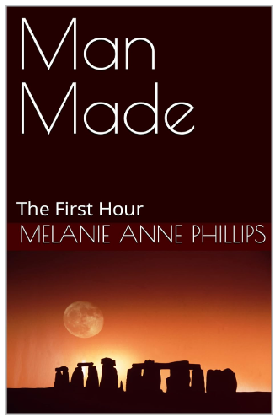
Read the Science Fiction Thriller
From the founder of Storymind
Man Made follows a mysterious force as it sweeps around the globe erasing anything man made -
Governments stagger under the panic, religions are at a loss for an explanation, scientists strive for any means to stop or divert the phenomenon, and the world’s population from families to individuals struggle to prepare for The Event, which will drive humanity back beyond the stone age.
The Event is coming.
Are you prepared?
Copyright Melanie Anne Phillips
|
|
Free Writing Resources
A Screenwriter’s Bag of Tricks
Most of our writing tips focus on the creation of a sound story, regardless of the medium in which you are working. But since the writing of screenplays has its own unique restrictions, requirements, and opportunities, we thought it might be useful to offer a Screenwriter's Bag of Tricks.
Like any good grab bag, this collection of tips and techniques is in no particular order. Some are geared to the beginning screenwriter, others to the expert. But regardless of your experience level, you're likely to find a few keepers.
Use index cards to work out the scenes in your script
Index cards (3x5 or 5x7 in size) are often used by screenwriters to plan out the sequence of events in their stories. Usually, a script has many different dramatic threads. The trick is how to weave them together over the timeline of the movie. For example, you might have several key challenges for your hero to overcome. You describe each of these on a different index card. You tack them up on the wall or lay them out on the table (or floor) and stand back and look at them. You see how the action seems to flow from one to another. Perhaps it seems that the ending is a bit anti-
Then, you may realize that you actually have a gap in the action that requires the creation of another challenge. So, looking at what comes before and what comes after, you determine the kind of action that is needed, and make a new card to fill the gap.
You might also realize that you have two challenges that are too much alike, or that would happen too close to each other, so you decide to lose one, or combine two into a single one that makes it all the stronger.
Then, you may know that you want a series of arguments between the hero and a love interest. In one creative session, you may work out how many arguments you want, and what each is about. You describe each of these arguments on a different index card.
As with the hero's challenges, you tack up the cards and arrange them in the best possible order, filling gaps with new cards, and deleting or combining cards until the flow is right.
Since a movie generally focuses on one dramatic situation at a time, then intercuts among several different threads as necessary, your next job is to combine both the challenge thread and the argument thread into the overall timeline of your script.
You might decide to start with the first challenge card, then go to the first argument, and alternate. Or you might start with the first argument, have a second argument, and then two challenges in a row.
There are no "rules" as to how the two threads of cards should be shuffled together. It is purely a choice of how you wish to impact your audience.
You may even find that once you have blended the two threads into a single timeline, that combination highlights the need for an additional challenge or another argument, or perhaps the removal of one or the other. You might even be able to see the need for a whole new thread that is suggested once the first two threads are combined. So you create a third set of index cards, put them in order, and then weave them into the other two.
In this manner, many screenwriters work out the basic beats and flow of their stories so they have a loose blueprint from which to write, and therefore don't get stuck in a logistic corner, or an emotional dead end.
Break up long monologs among several characters
There are some moments in some movies in which a long monolog by a single individual works well. Any inspiring public speech, for example, or when one character holds others transfixed with a tirade or diatribe. But movies are an action medium, and most of the time a long-
To avoid this, take your longer speeches and distribute the material to one or more additional characters. It is far more interesting to see what everyone has to say on the issue, than to see what one person has to say.
Think about real life situations. Aside from presentations and reports in a business situation, or structured events such as a ceremony, no one thinks well of someone who hogs the conversation. Let you characters make their point, then let someone else have a turn. Good examples of this can be found in the original Howard Hawk's production of "The Thing," and also in "The Big Chill," both of which have extensive exposition and opinion, but no one says more than a few lines at a time before another chimes in with his two cents' worth.
The exceptions, of course, is when someone gets all wrapped up in his own rhetoric, as when an individual muses, reminisces, waxes poetic, or proclaims a higher truth with fire in his eyes. People don't mind if a good storyteller talks forever. Look at the long pontifications of the characters in "Network." But even these are handled as special moments, and the ebb and flow of normal conversation continues in between, serving both to break up the monotony, and also to uplift the long passages by contrast.
Use "Red Herrings"
The old expression, "A Red Herring," means something that is intentionally misleading. In screenplays, a red herring is a scene, which is set up intentionally to mislead an audience.
One example is in the movie, "The Fugitive," with Harrison Ford as Dr. Richard Kimble. He escapes from the prison bus, gets some street clothes, and is on the run.
He waits under a bridge and when an associate that he worked with stops his car for a red light, Kimble steps out and pretends to be a homeless person trying to wash his windshield for a buck. He uses this action as a "cover" while he holds a conversation with the associate to get some information and help.
In the background, out of focus, a police car slowly approach behind the associate's car. You don't see it at first because you are concentrating on the conversation. The police car stops. Suddenly, it's lights and siren comes on. The audience is sure the jig is up. Kimble turns to look at it, and the police car whips around the associate's car and takes off for some call it received.
The initial impression was that Kimble was about to be recaptured because the cops had recognized him. The "reality" was that they were just on patrol, got a call, and sped off with sirens wailing.
Red Herrings can be used for anything from the momentary shock value as above, to making a bad guy appear to be a good guy.
To make it work, you have to do two primary things:
1. Don't leave out essential information or the audience will feel manipulated. Tricking your audience by misleading them is fun for them. But if you fool them by leaving out information they would legitimately have expected to be told about, then you are just screwing with them.
Red herrings are best accomplished by having information that is taken in one context and then the context is changed. This way, you aren't holding back, you are just changing the perspective.
Your audience invests its emotions in your story. You don't want to violate them. As an example, there is an old joke about a nurse in a maternity ward who comes in to a mother's room carrying the new baby. She trips and falls and the baby hits the floor. Then, she gets mad at it for falling, picks it up, swings it around and bashes it against the wall. The mother is in hysterics. The nurse picks up the kid and says, "April Fool -
A better approach is to see a mom yank her child by the arm in a very abusive way while walking down the street. First reaction is she is an ogre and you run to stop her. Just then, you see the truck come whipping around the corner that would've hit and killed the child, and you stop in your tracks realizing the mom was saving his life. You look again, and the is hugging and holding him, and she is crying because he was almost lost, and because she startled him.
Psychologists call it "Primary Attribution Error," and you can use it to your advantage. If done properly, they will love you for it.
2. Don't change the rules of the game just to make things happen another way or the audience will feel that you lied to them.
The audience will give you their trust. They expect that what you tell them is the truth. They build on each bit of information, trying to understand the big picture.
You can easily change context to show something in a different light, but don't tell them one thing and then simply say, "Oh that wasn't true, I was just messing with you."
That is a sure way to lose their trust, and once lost, you'll never get it back.
Don't say it if you can show it
Movies are a visual medium. The strongest impact is created by what is seen, not what is said. Although we might marvel at well-
Before writing a dialog scene, consider the information you are trying to convey. Consider visual alternatives that would show the audience rather then tell them. Even character development can often be more effective by seeing what the character does, rather than listening to what he or she says.
If you do need to say it, try to create a visually interesting situation in which the dialog can occur. I once had to do an interview on a big-
I could have just gone to the site, set up the camera, and filmed him in front of the rig. But when he picked me up at the airstrip, he was in a dusty, beat-
I took out the camera and did the entire interview while bouncing around in the cab. When we arrived at the site, I simply shot a lot of silent footage of the goings on. When we cut it all together, we began with the truck interview, and then cut away to the various aspects of the job as the geologist spoke. It created a riveting three-
So if you have dialog to deliver and you can't really communicate the information in a visual way, consider changing the location or engaging your characters in some activity that will at least add a visual element.
You might have them conversing during one-
You can do a scene completely in silhouette, seen from the POV of a goldfish in a bowl, from another room as a janitor stops to listen and then continues with his cleaning.
You can even get overt. There was a television program many years ago called "Then Came Bronson," starring Michael Parks. It was noted for trying new visual techniques. For one long dialog conversation, the director shot the two characters from the side, walking along a sidewalk across the street. He shot them silent in several locations with different backgrounds, always the same distance away, walking at the same pace. In the editing room, he cut from one location to the next so that it appeared as if the characters were continuing to walk and the background jumped from one to another behind them. The dialog was then added over the sequence as a whole.
This simple technique gave power to an otherwise uninteresting scene, added the impression that they had been talking for a long walk all over town, but got the verbal information across as concisely as possible. So look for visual opportunities to enliven dialog, and if there aren't any, make them.
Drop exposition through arguments
Here's a short one... A person talking is often boring. People arguing are often compelling. If you have to drop exposition, try to do it in the back and forth barbs of an argument. Let the characters use the information you need to convey as barbs in their back and forth attacks. Then your story won't grind to a halt just because you need to tell your audience something.