Read the Science Fiction Thriller
From the founder of Storymind
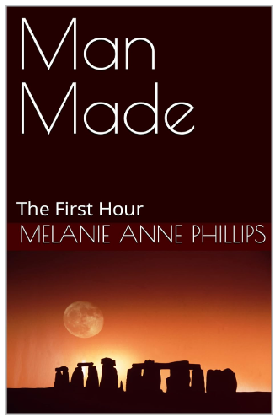
Man Made follows a mysterious force as it sweeps around the globe erasing anything man made - from buildings, vehicles, and technology to medicines, clothing, and dental work.
Governments stagger under the panic, religions are at a loss for an explanation, scientists strive for any means to stop or divert the phenomenon, and the world’s population from families to individuals struggle to prepare for The Event, which will drive humanity back beyond the stone age.
The Event is coming.
Are you prepared?
Psychoanalyze Your Story
By Melanie Anne Phillips
Does your story suffer from "Multiple Personality Disorder"?
In psychology, Multiple Personality Disorder describes a person who has more than one complete personality. Typically, only one of those personalities will be active at any given time. This is because they usually share attributes, and so only one can have that attribute at any particular moment.
Stories can also suffer from Multiple Personality Disorder if more than one character represents a single attribute. In such a case, both should not be able to appear in the story at the same time. If they do, the audience feels that the story is fragmented, or more simply put, the story has developed a split-personality.
Dramatica sees a story as representing a single mind. Most writers have been taught that characters, plot, theme, and genre are people, doing things, illustrating value standards, in an overall setting and mood. In contrast, Dramatica sees characters, plot, theme, and genre as representing different "families of thought" which go on in the story mind as it grapples with a central problem.
Characters are the "drives" of the Story Mind, which often conflict as they do in real people. Plot describes the methods used by the Story Mind in an attempt to find a solution to its central problem. Theme represents the Story Mind's conflicting value standards, which must be played out one against another to determine the best way of evaluating the problem. Genre describes the Story Mind's overall personality.
Traditional story theory states that each character must be a complete person to be believable to an audience. But because the characters represent the independent drives of a single Story Mind, each is not really a complete person but is rather a facet of a complete mind. In fact, if you make each character complete, they will all be overlapping, and will give your story a split-personality.
It is in the story TELLING stage where characters take on the trappings of a complete person, not in the story STRUCTURE. Each character needs to be given traits and interests, which round out the character's "presence," making it feel like a real human being. But these trappings and traits are not part of the dramatic structure. They are just window dressing - clothes for the facets to wear so the audience can better relate to them on a personal level.
Think about the characters you have seen in successful stories. They might represent Reason, Emotion, Skepticism, or function as the Protagonist or Antagonist, for example. Each of these kinds of characters is an "archetype" because it contains a whole family of drives in one character. For example, a Protagonist may contain the drive to "pursue," and also the drive to be a self-starter, "pro-action." Because these drives work together in harmony, the character becomes archetypal.
The individual drives don't have to be bundled in an archetype, however. In fact, each single drive might be assigned to a different character, creating a multitude of simple characters. Or, characters might get several drives but conflicting ones. These characters are more "complex" because their internal make-up is not completely consistent.
Regardless of how the drives (also called character "elements") are assigned, each drive should appear in one and only one character. If not, your story may develop Multiple Personality Disorder and leave your audience unable to relate to the story as a whole.