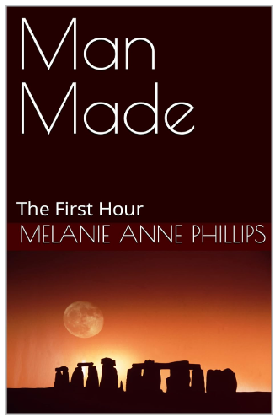
Read the Science Fiction Thriller
From the founder of Storymind
Man Made follows a mysterious force as it sweeps around the globe erasing anything man made - from buildings, vehicles, and technology to medicines, clothing, and dental work.
Governments stagger under the panic, religions are at a loss for an explanation, scientists strive for any means to stop or divert the phenomenon, and the world’s population from families to individuals struggle to prepare for The Event, which will drive humanity back beyond the stone age.
The Event is coming.
Are you prepared?
Main Character Approach
Do-er or Be-er?
There are twelve structural questions that have such great impact on the direction and meaning of a story that answering them is essential, either before you write or absolutely before you lock off your final revision.
The third of these is called Main Character Approach, and it is a structural choice between characters who prefer to solve problems by taking direct action (do-er) or by affecting others (be-er).
Some of the characters you create as an author will be Do-ers who try to accomplish their purposes through activities (by doing things). Other characters are Be-ers who try to accomplish their purposes by adopting an attitude or inspiring others, as with a role model).
When it comes to the Main Character, this choice of Do-er or Be-er will have a large impact on how he or she approaches the Story's problem. If you want your Main Character to prefer to solve problems externally, choose Do-er. If you want your Main Character to prefer to solve problems through internal work, choose Be-er.
By temperament, Main Characters (like each of us) have a preferential method of approaching Problems. Some would rather adapt their environment to themselves through action, others would rather adapt their environment to themselves through strength of character, charisma, and influence. There is nothing intrinsically right or wrong with either Approach, yet it does affect how one will respond to Problems.
Choosing "Do-er" or "Be-er" does not prevent a Main Character from using either Approach, but merely defines the way he is likely to preferentially approach a Problem, using the other method only if the first one fails.
Examples of Do-er characters are John McClane (played by Bruce Willis) in Die Hard or Harry Callahan (Clint Eastwood) in Dirty Harry. Rookie FBI agent Clarice Starling (Jodie Foster) in The Silence of the Lambs also responds instinctively to events by taking action, which is why her supervisor believes she will make a good FBI agent when she graduates from training.
An example of a Be-er character with an intrinsic approach to problem-solving by deliberating is Frank Horrigan (played by Clint Eastwood) in the film In the Line of Fire.
Attorney Ned Racine (played by William Hurt) in Body Heat is also a Be-er. He seems impulsive in matters of love but deliberates about his options before agreeing to help sexy Matty Walker (Kathleen Turner) inherit her husband's fortune.
A Be-er can seem like a victim in a story where actions precede decisions. In a story influenced by decisions, however, Be-ers are often the mastermind or supervisor behind the scenes, putting restraints on characters who are Do-ers. In a TV cop show like Law & Order, a Be-er might be the Chief of Police or District Attorney rather than an undercover Detective or a Assistant District Attorney whose job is to prosecute criminals in court.
Many famous movie pairs contain both a Be-er and a Do-er, such as Butch and Sundance (played by Paul Newman and Robert Redford) in Butch Cassidy and the Sundance Kid, the title characters of Thelma & Louise (Geena Davis and Susan Sarandon) or Billy Ray Valentine and Louis Winthorpe III (Eddie Murphy and Dan Ackroyd) in Trading Places.