|
 |
 |
 |
 |
 |
 |
 |
|
|
|
|
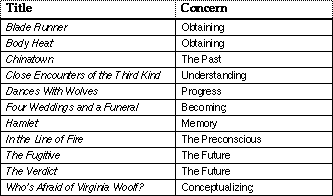
10. Overall Story ConcernWithin the scenario against which your story takes place, there is an area of shared importance to all the characters in your story. Select the item(s) that best describes this Concern. Overall Story Concern: the purposes or interests sought after by the Overall Characters. Problems can manifest themselves in several ways. Therefore, simply defining the nature of a Problem does not necessarily predict its effect. For example, if the Problem is that there is not enough money to pay the rent, it might motivate one person to take to drink but another to take a second job. The effects of a Problem are not necessarily bad things, but simply things that would not have happened quite that way without the existence of the Problem. So it is with Concerns. The choice of Concern determines the principal area affected by the story's Problem and serves as a broad indicator of what the story is about. The Concern of a story tends to revolve around a definable area of activity or exploration. This central hub may be internal such as Memories or Conceiving an Idea (coming up with an idea). Or, it may be external such as Obtaining or How Things are Changing. When choosing a Concern it is often useful to ask, "Which of these items do I want the characters in my story to examine?" Keep in mind that the Concern only describes WHAT is being looked at. HOW to look at it is determined by choosing the Issue. The choice of Concern sets limits on how much dramatic ground the Theme can potentially encompass and therefore includes some kinds of considerations and excludes others. Three of the 16 Concerns are Obtaining, Understanding and How Things Are Changing. For example, an Obtaining Concern can be seen in Body Heat as both the wife (Matty Walker, played by Kathleen Turner) and the lawyer (Ned Racine, played by William Hurt) are concerned with obtaining money. This propels them to plot the murder of her rich husband, which leads to further complications for the naive lawyer. An Understanding Concern is seen in Close Encounters of the Third Kind as both Roy Neary and Jillian Guiler (played by Richard Dreyfuss and Melinda Dillon) are trying to understand why they're drawn to Devil's Tower. At the same time, the scientists are trying to understand what's happening in the heavens through the increased number of extra-terrestrial sightings, the consistent musical tones they are receiving from Space, and other unusual signs from above. A How Things Are Changing Concern is explored in Dances With Wolves as both the Sioux and Lt. John Dunbar (played by Kevin Costner) are concerned with how things are going between the Native Americans and the white men who are encroaching on their land and eliminating their traditional means of survival -- primarily the buffalo. The white soldiers are also concerned about how things are going between the Native Americans and themselves in addition to the progressive influence the railroad is having on the Western frontier. Examples of Objective Story Concerns:
*Try either or both for 90 days. Not working for you? Return for a full refund of your purchase price!
|
|
|
Contact Us - About Us - Lowest Price Guarantee - Shipping - Return Policy Copyright Melanie Anne Phillips - Owner, Storymind.com, Creator Storyweaver, Co-creator Dramatica |