A step by
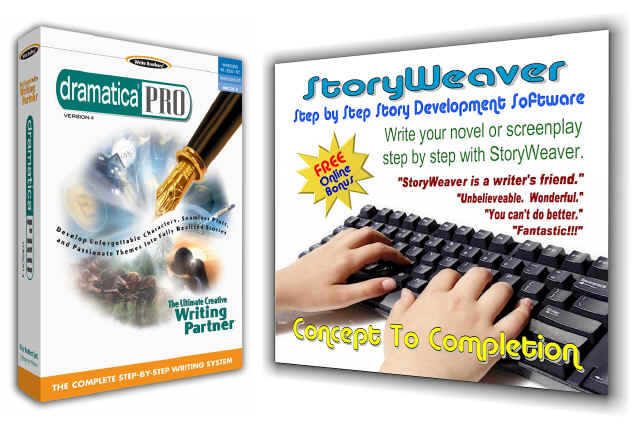
step approach to story development, from concept to completed story for
your novel or screenplay. More than 200 interactive Story Cards guide
you through the entire process.
The most
powerful story structuring software available, Dramatica is driven by a
patented "Story Engine" that cross-references your dramatic
choices to ensure a perfect structure.
The most
advanced screenwriting software available, Movie Magic is deemed a
"preferred file format" by the Writer's Guild. An industry
standard, MMS is used by professionals and studios around the world.
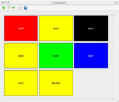
Interactive
index cards - Name them, add notes, titles, colors, click and drag to
re-arrange, adjust font, save, export and print. An essential tool for
every writer.
by
Melanie Anne Phillips
Creator StoryWeaver, Co-creator
Dramatica
If you are writing
with only Heroes and Villains, you are limiting yourself. A
Hero is a Main Character who is also a Protagonist. A Villain
is an Obstacle Character who is also an Antagonist.
What’s the
difference between a Main Character and a Protagonist? The
Main Character represents the audience position in the story.
It is the character the audience most cares about, most
empathizes with. The Protagonist is the character who drives
the plot forward.
These two functions
don’t have to be placed in the same character as they are in
a Hero. In real life, we are not always running the show.
Similarly in stories, the Main Character doesn’t have to
always be the guy leading the charge. Separating the two
functions opens up a wide variety of new audience experiences
and creates characters that are less archetypal and formulaic.
Similarly, when we
split a Villain into an Obstacle Character and an Antagonist,
we open up opportunities, some of which bear directly on the
nature and function of a Love Interest and the structure of a
"Buddy Picture."
First, what is the
difference between the Obtstacle Character and the Antagonist?
The Obstacle Character represents a point of view opposite
that of the Main Character. Every Main Character will be
driven by some central belief system around which the
story’s philosophic argument revolves. This belief system
might be an attitude, a way of doing things, or something as
extensive as a specific “world view.” The Obstacle
Character represents the view that is diametrically opposed.
Over the course of the
story, the Obstacle Character’s impact will bring the Main
Character to a point of decision at which he or she must
choose to stick with the old “tried and true”
philosophy/approach or to adopt the alternative put forth by
the Obstacle Character. In many stories, this moment results
in a “Leap of Faith” in which the Main Character is forced
to make a conscious decision to go with one view or the other
at the critical moment. In other stories, the Main Character
may gradually warm to the Obstacle Character’s view, but the
audience is not sure if that warmth will hold when the chips
are down. Only at the critical moment will the story
demonstrate on which side of the fence the Main Character
drops, not by conscious choice but by responding from the
heart.
If you found this
article useful, you may wish to test drive my StoryWeaver
or Dramatica story development software which guide you
step by step through the entire story development process from
structure to storytelling.
*Try either or both for 90 days. Not working for you?
Return for a full refund of your purchase price!
About Dramatica and
StoryWeaver
Hi, I'm Melanie Anne Phillips,
creator of StoryWeaver,
co-creator of Dramatica
and owner of Storymind.com. If you have a moment, I'd like to tell you
about these two story development tools - what each is designed to do, how
each works alone on a different part of story development and how they can be
used together to cover the entire process from concept to completion of your
novel or screenplay.
What They Do
Dramatica is a tool to help you
build a perfect story structure. StoryWeaver is a tool to help you build
your story's world. Dramatica focuses on the underlying logic of your
story, making sure there are no holes or inconsistencies. StoryWeaver
focuses on the creative process, boosting your inspiration and guiding it to add
depth, detail and passion to your story.
How They Do It
Dramatica has the world's only
patented interactive Story Engine™ which cross-references your answers to
questions about your dramatic intent, then finds any weaknesses in your
structure and even suggests the best ways to strengthen them.
StoryWeaver uses a revolutionary new
creative format as you follow more than 200 Story Cards™ step by step through
the story development process. You'll design the people who'll inhabit
your story's world, what happens to them, and what it all means.
How They Work
Together
By itself Dramatic appeals to
structural writers who like to work out all the details of their stories
logically before they write a word. By itself, StoryWeaver appeals to
intuitive writers who like to follow their Muse and develop their stories as
they go.
But, the finished work of a
structural writer can often lack passion, which is where StoryWeaver can help.
And the finished work of an intuitive writer can often lack direction, which is
where Dramatica can help.
So, while each kind of writer will
find one program or the other the most initially appealing, both kinds of
writers can benefit from both programs.
Try Both Programs
Risk Free!
We have a 90
Day Return Policy here at Storymind. Try either or both of these
products and if you aren't completely satisfied we'll cheerfully refund your
purchase price.
Our
Bestseller! A
step by step approach to story development, from concept to completed
story for your novel or screenplay. More than 200 interactive
Story Cards guide you through the entire process.
Includes
2 Exclusive Bonuses! The
most powerful story structuring software available, Dramatica is driven
by a patented "Story Engine" that cross-references your
dramatic choices to ensure a perfect structure.
Little
brother to Dramatica Pro, Writer's DreamKit is built around the same
patented Story Engine - it just tracks fewer story points. So, you
develop the same solid story structure, just with fewer details.
Perfect for beginning writers or those new to Dramatica.
An
all-in-one writing environment with built-in word processor that helps
you organize and cross-reference your story development materials.
INCLUDES DVD SET BONUS!
The most
advanced screenwriting software available, Movie Magic is deemed a
"preferred file format" by the Writer's Guild. An
industry standard, MMS is used by professionals and studios around the
world.
Everything
you need to know about story structure - twelve hours of video on a
single DVD - presented by Dramatica Theory co-creator, Melanie Anne
Phillips.
14 hours of
video from a live two day course taught by theory co-creator Melanie
Anne Phillips covering Dramatica story structure and StoryWeaver
storytelling.
A three-hour
audio CD set that explains everything you need to know to create
characters of both sexes that ring absolutely true (and maybe even gain
insight into the communication problems in the real world!)
The Story
Mind approach to writing uses your own passions to create your story's
structure. It focuses your efforts, clarifies the direction of
your story, and triggers your imagination.














 Format:
Windows / Mac CD-ROM
Format:
Windows / Mac CD-ROM