Read the Science Fiction Thriller
From the founder of Storymind
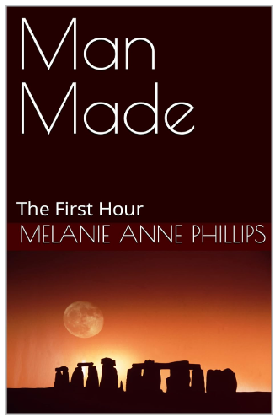
Man Made follows a mysterious force as it sweeps around the globe erasing anything man made - from buildings, vehicles, and technology to medicines, clothing, and dental work.
Governments stagger under the panic, religions are at a loss for an explanation, scientists strive for any means to stop or divert the phenomenon, and the world’s population from families to individuals struggle to prepare for The Event, which will drive humanity back beyond the stone age.
The Event is coming.
Are you prepared?


Subplots can be divided into two types: Those that run parallel and don't really affect each other dramatically, and those that are dramatically hinged together.
An example of parallel subplots can be found in Woody Allen's "Crimes and Misdemeanors" in which the "Crime" story with Martin Landau and the "Misdemeanor" story with Woody Allen never really affect each other.
The purpose of having these two stories in the same "work" is for the audience to be able to compare two completely different issues that share a common cultural concern. In "Crimes and Misdemeanors," it is the differential created between them which provides a social message that extends beyond the meaning found by either of the two Main Characters.
An example of a hinged subplot can be found in the original "Star Wars." Han Solo's debt to Jabba the Hutt is a story in its own right with Han as the Main Character. This subplot eventually comes to have change the course of the plot in the main story.
The purpose of having a subplot may be two-fold: 1: to enhance a character, theme, plot, or amplify part of the genre of the "work" and/or 2: to move the course of the main story in a direction it could not dramatically go in and of itself.
In "Star Wars," Han Solo is initially uncooperative and refuses to get involved in the efforts of Obi Wan or Luke. For example, when the group first arrives on the Death Star, Han wants to fight, not to hide in the room while Obi Wan goes off. But when Luke discovers that the princess is on board, Han wants to wait in the room and not fight. It is his nature.
So, how do we get Han to join Luke in the rescue attempt? We invoke Han's subplot. Luke tells Han, "She's rich," and Han is already hooked. But if there were no Jabba subplot, the money alone would not be enough to convince the uncooperative Han to "walk into the detention area." On the other hand, since Jabba has put a price on Han's head, he's dead already unless he can come up with the money, and this is probably the only chance he's going to get to do that.
As a result, Han joins the plan, acting completely against what his character would do dramatically in the main story but in complete consistency with his personal needs (which are more important to him) in his subplot.
Use both the parallel and hinged subplots to enhance your story's depth and move it in directions it could not legitimately go with only the main plot.